 91-9711165183
 May 5, 2026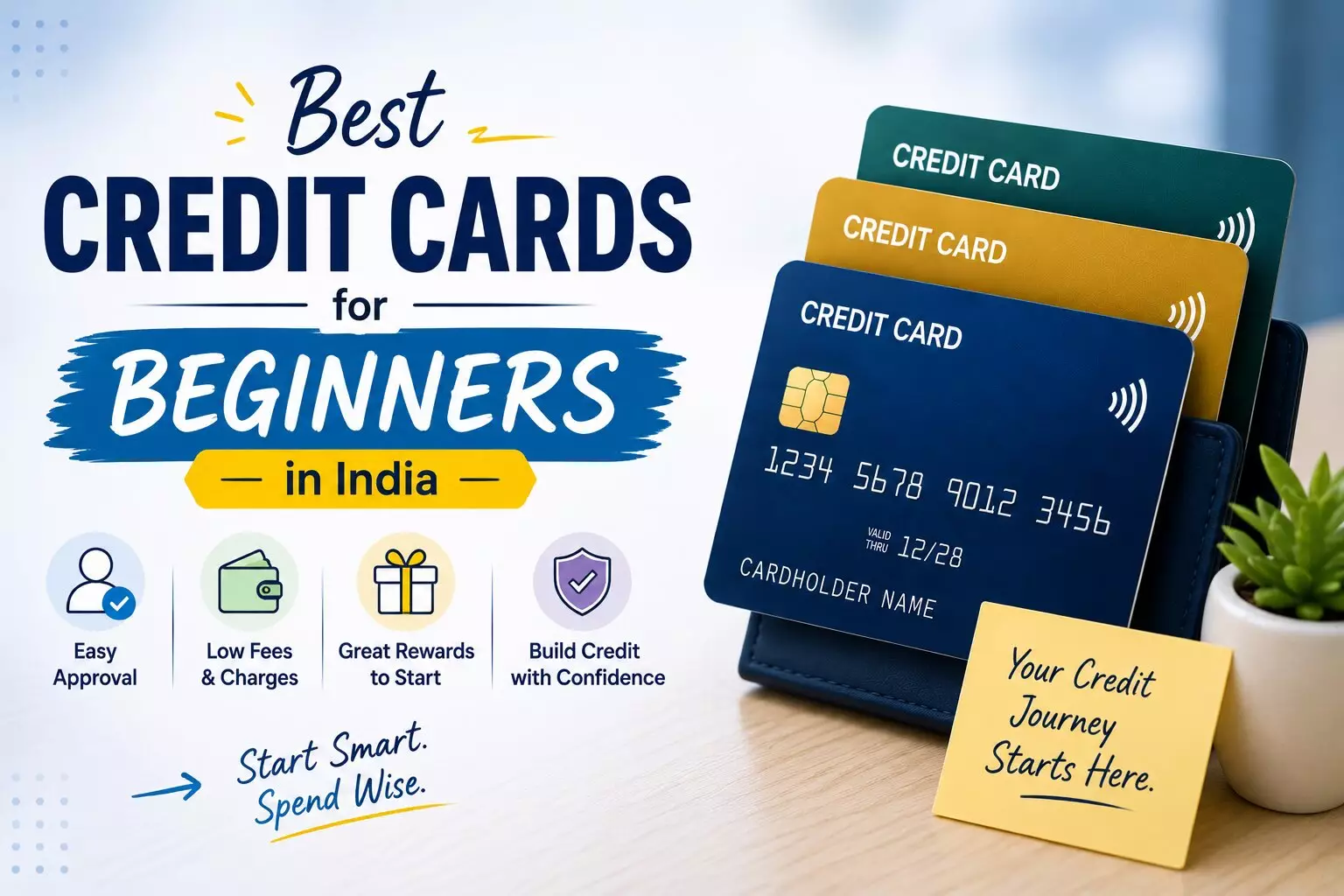
TL; DR: If you are new to credit, start with a lifetime-free or low-fee card and use it lightly but regularly. The Amazon Pay ICICI and IDFC FIRST Millennia are the best no-fee starters. The HDFC MoneyBack+ and ICICI Coral are the easiest low-fee entry cards, the Axis ACE is the simplest for everyday cashback, and the Tata Neu Plus rewards UPI spends. If your income is low or you have no credit history at all, an FD-backed secured card is the smartest first step. Whichever you pick, the rule that matters most is not the reward rate – it is paying your bill in full, every month.
Most people are told two opposite things about their first credit card: that it is the fastest way into debt, and that everyone needs one. Both can be true – it depends entirely on how you use it. Used carelessly, a card is an expensive habit. Used well, your first card quietly builds the credit score that decides whether you get a home loan, a car loan or even a rented flat years from now.
If you are a student, a first-time salaried employee, or simply new to credit, this guide is written for you. We compare the best starter credit card options in India for 2026, explain in plain language what makes a card genuinely beginner-friendly, decode the jargon that trips up first-timers, and show you exactly how to use your card to build a strong credit history from day one. No hype, no pressure – just what actually works.
Figures are indicative as of July 2026, exclude GST, and are subject to change. Eligibility and fees vary by profile – always confirm the latest terms before applying.
|
Credit Card |
Annual Fee |
Min. Monthly Income |
Key Reward |
What Makes It Beginner-Friendly |
|
Amazon Pay ICICI Bank |
Nil (lifetime free) |
Relatively relaxed |
5% Amazon (Prime), 1% others – as cashback |
Zero cost, simple cashback, easy approval |
|
IDFC FIRST Millennia |
Nil (lifetime free) |
Rs. 25,000 (or Rs. 3L/yr) |
Up to 10X on dining/travel, low interest |
No fee, low APR, points never expire |
|
HDFC MoneyBack+ |
Rs. 500 (waived on Rs. 50,000) |
Rs. 20,000 |
10X CashPoints on select partners, 2X others |
Lowest fee-waiver bar, easy HDFC starter |
|
ICICI Coral |
Rs. 500 (waived on Rs. 1.5L) |
Rs. 20,000 |
2 reward points per Rs. 100 |
True entry-level card with lifestyle perks |
|
Axis Bank ACE |
Rs. 499 (waived on Rs. 2L) |
Rs. 25,000 |
5% bills (GPay), 4% food/cabs, 1.5% flat |
Simple, predictable cashback on daily spends |
|
Tata Neu Plus HDFC |
Rs. 499 (waived on Rs. 1L) |
Rs. 25,000 |
2% NeuCoins Tata brands, 1% UPI |
Rewards on UPI spends, good for Tata users |
|
HDFC Millennia |
Rs. 1,000 (waived on Rs. 1L) |
Rs. 25,000 |
5% CashPoints on 10 brands, 1% others |
Multi-brand cashback with easy 1:1 redemption |
The default first card for millions, and for good reason: it is lifetime free, approval is relatively easy, and the rewards are dead simple – up to 5% back on Amazon for Prime members and 1% everywhere else, credited as Amazon Pay balance that never expires. What makes it beginner-friendly: no fee to worry about, no complex points to decode, and no pressure to spend. You genuinely cannot lose money holding it.
A lifetime-free card with two features beginners rarely appreciate until later: one of the lowest interest rates among Indian cards, and reward points with a long validity so you are not rushed to redeem. It earns up to 10X on dining and travel. What makes it beginner-friendly: zero fee, a low APR that softens the cost of an occasional slip, and a straightforward rewards structure.
One of the most accessible HDFC cards, with a modest Rs. 500 fee that is waived on just Rs. 50,000 of annual spend – the lowest waiver bar on this list. It offers 10X CashPoints on select partners and 2X on other spends. What makes it beginner-friendly: an easy fee waiver, relaxed eligibility from Rs. 20,000 monthly income, and a trusted issuer to start your HDFC relationship.
A classic entry-level card with a low Rs. 500 fee (waived on Rs. 1.5 lakh spend) that still bundles lifestyle perks like dining discounts, movie offers and lounge access on qualifying spends. It earns 2 reward points per Rs. 100. What makes it beginner-friendly: genuinely low cost, accessible eligibility from Rs. 20,000 monthly income, and perks that feel premium without a premium fee.
The simplest cashback card for everyday life – 5% on utility bills paid via Google Pay, 4% on Swiggy, Zomato and Ola, and a flat 1.5% on everything else. What makes it beginner-friendly: the flat rate means you never have to track categories, cashback is automatic, and the joining fee is waived if you spend just Rs. 10,000 in the first 45 days.
A rare starter card that rewards UPI spends – 1% back as NeuCoins on UPI, 2% on Tata brands like BigBasket, Croma and Westside, and 1% elsewhere. What makes it beginner-friendly: if you already shop across the Tata ecosystem or pay by UPI, it turns everyday spends into rewards, with a low Rs. 499 fee waived on Rs. 1 lakh of spend.
A slight step up in fee (Rs. 1,000, waived on Rs. 1 lakh) but excellent value because its CashPoints redeem at up to Re. 1 as statement credit. It earns 5% back across ten popular brands. What makes it beginner-friendly: rewards convert to real money with no puzzle, and it grows with you as your spending rises. Best kept for beginners confident they will cross the Rs. 1 lakh waiver.
A starter credit card is an entry-level card designed for people with little or no credit history. It typically carries a low or zero annual fee, relaxed income and eligibility requirements, and a modest credit limit that grows as you prove yourself a reliable borrower. It will not have the flashy lounge access or high reward rates of a premium card, and that is the point: a starter card is built to get you into the credit system safely and help you build a track record, not to reward heavy spending.
Because a credit card does something a debit card cannot: it creates a credit history. Every on-time payment is reported to credit bureaus like CIBIL, and over months this builds the score lenders check before approving any future loan. A card also offers a genuine interest-free period of up to 45-50 days, fraud protection stronger than a debit card, rewards on spending you would do anyway, and a financial safety net for emergencies. Start early and use it lightly, and by the time you actually need a big loan, you already have the score to get a good rate.
Lenders do not trust strangers; they trust track records. Someone with no credit history is a blank page to a bank, and a blank page is risky. A starter card lets you write that history in small, safe strokes: a few purchases a month, paid in full, repeated consistently. Do this for six to twelve months and you move from invisible to approvable. Skip it, and you may find yourself at 30 wanting a home loan with no score to show for years of earning. The earlier you start, the stronger your position later.
Not every card marketed to newcomers is actually suitable. A genuinely beginner-friendly card ticks these boxes:
If you are a student, a homemaker, a freelancer without formal income proof, or someone with no credit history at all, a secured credit card is often the smartest first move. It is issued against a fixed deposit that acts as collateral, so the bank takes on almost no risk – which means approval is easy and usually needs no income documents or minimum credit score.
Understand this through an example. You open an FD (some banks start as low as Rs. 2,000-5,000) and the bank gives you a card with a limit of roughly 75% to 100% of that deposit. You use the card normally and pay the bill like any other card. Crucially, your FD keeps earning interest the whole time, and every on-time payment builds your CIBIL score. After 12 to 18 months of good behaviour, you graduate to a regular unsecured card. The only catch: you cannot break the FD until you close the card. For a true beginner, that trade-off is well worth it.
Some cards look tempting but will work against a newcomer. Steer clear of these until your income and credit history are established:
The entire art of using a credit card well fits into a few habits:
Do this and the card costs you nothing while quietly building your score.
Half the confusion around credit cards comes from vocabulary. Here are the terms that matter most, in plain English:
|
Term |
What It Actually Means |
|
Billing cycle |
The roughly one-month period whose spends appear on a single statement. |
|
Grace / interest-free period |
The 45-50 days you get to pay without any interest – only if you clear the full balance. |
|
Minimum amount due (MAD) |
The small minimum (often 5%) you must pay to avoid a late fee. Paying only this keeps you in debt. |
|
Credit utilisation |
The share of your limit you use. Below 30% is healthy for your score. |
|
APR / finance charge |
The yearly interest (18%-42%) charged on any unpaid balance. |
|
Credit limit |
The maximum you can spend on the card, set by the bank based on your profile. |
|
CIBIL score |
A 300-900 number summarising your creditworthiness. 750+ is considered good. |
Your credit score is not random, it is driven by a few clear factors, and a starter card lets you influence the two biggest ones directly. Payment history is the single largest driver: pay in full and on time every month and this pillar stays strong. Credit utilisation is next: keep spending below 30% of your limit and you signal control rather than dependence. The length of your credit history matters too, which is exactly why starting early helps – a two-year-old card is worth more than a brand-new one. Add a healthy mix of credit over time and avoid frequent applications, and within 6 to 12 months a well-used first card can lift you into the 750-plus range that unlocks the best loan rates.
Work through four simple questions.
First, what is your income and profile? If you have steady salary proof, an entry-level card like MoneyBack+ or Coral fits; if not, start FD-backed.
Second, where do you spend? An Amazon regular wants Amazon Pay ICICI, a UPI-heavy user leans Tata Neu Plus, a bills-and-food spender suits Axis ACE.
Third, can you clear the fee waiver? If a card charges a fee, make sure you will realistically hit the spend that waives it.
Fourth, is it simple enough that you will actually use it well? For a beginner, a card you understand beats a card that looks impressive.
|
Card Type |
How It Works |
Best Suited For |
|
Lifetime-free card |
No annual fee, ever; modest rewards |
Anyone wanting a zero-cost first card |
|
Low-fee entry card |
Small fee, easily waived on modest spends; lifestyle perks |
First-time salaried earners |
|
Secured (FD-backed) card |
Issued against a fixed deposit; easy approval |
Students, no income proof, or no credit history |
|
Cashback card |
Flat or category cashback on daily spends |
Those who want simple, visible value |
|
Co-branded / UPI card |
Extra rewards on a brand ecosystem or UPI |
Loyal shoppers of a specific brand |
Garima, 24, had just started her first job in Jaipur with a salary of Rs. 25,000 a month and no credit history. Two banks had already turned down her application for a regular card because she was a blank page to them. Instead of applying again and collecting more rejections, she took a different route: she opened a Rs. 40,000 fixed deposit at her bank and took a secured, FD-backed credit card against it, which was approved almost instantly with no credit-score requirement.
She used it lightly – a few thousand rupees a month on groceries and her phone bill – kept utilisation under 30%, and paid the full balance on time every single month. Her FD kept earning interest the whole time. Fourteen months later her CIBIL score had climbed past 760, and the same bank that once rejected her offered her a regular lifetime-free rewards card with a higher limit. Garima did not need a big salary to start – she needed a smart first step and the discipline to pay on time.
The best credit card for a beginner is not the one with the most rewards – it is the one you can use responsibly while you learn. Start low-cost or lifetime-free, or go FD-backed if you are truly starting from zero. Then let the boring habits do the heavy lifting: spend a little, pay in full, stay under 30%, never miss a date. Get this right in your first year and your card stops being a risk and becomes the foundation of a strong financial future – one that pays off every time you apply for something bigger.
New to credit and not sure where to begin? Talk to the advisors at Your Loan Advisors. Apply for a beginner-friendly credit card that matches your income and profile. Our experts will guide you through the entire process so you start your credit journey the right way. Check your eligibility with Your Loan Advisors today.
Disclaimer: Credit card fees, eligibility criteria, rewards and interest rates are revised frequently by banks. All details here are accurate to the best of our knowledge as of July 2026 and are for informational purposes only, not financial advice. Please verify the latest terms on the official bank website and confirm what suits your profile before applying.