 91-9711165183
 May 20, 2026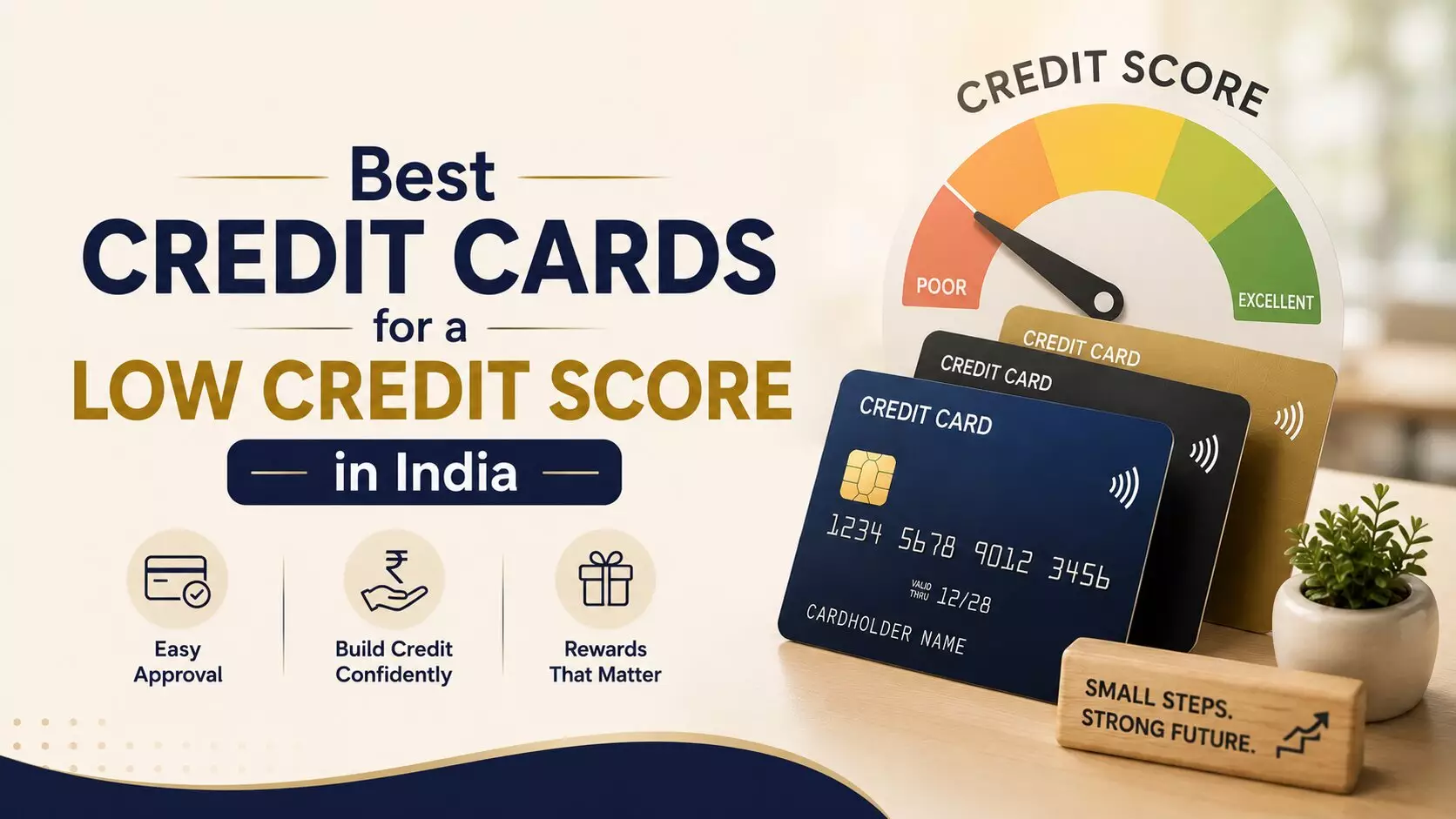
TL;DR: A low credit score does not lock you out of credit for good. The fastest route back is a secured, FD-backed card such as the IDFC FIRST WOW!, Axis Bank Insta Easy, Kotak 811 Dream Different or SBI Unnati, which are approved against a fixed deposit with no credit-score check. Use one for 12 to 18 months, keep utilisation under 30%, pay every bill in full and on time, and your score climbs, unlocking better unsecured cards. Do not keep applying for cards you will be rejected for; each rejection makes it worse.
Getting turned down for a credit card because of a low credit score, or no credit history at all, is deflating. It can feel like a permanent no. It is not. A low score is a snapshot of the past, not a verdict on your future, and it can be rebuilt in months, not years. It also helps to know that banks do not all judge applicants the same way; where one says no, another with a secured product will happily say yes.
The key is to stop chasing the cards that keep rejecting you and switch to the ones designed for your situation, namely secured and entry-level cards that are built to help you rebuild. This guide compares the best credit cards for a low credit score in India in 2026, explains how secured cards work, and shows, through a realistic example, exactly how to move from a score around 600 to one that qualifies you for premium cashback cards.
These are predominantly secured, FD-backed cards, which are the surest route to approval and rebuilding. Figures are indicative as of July 2026 and subject to change.
|
Credit Card |
Type |
Min. Fixed Deposit |
Fee |
Why It Works for a Low Score |
|
IDFC FIRST WOW! |
Secured (FD-backed) |
Rs. 20,000 |
Lifetime free |
No credit score or income check, 4x rewards |
|
Axis Bank Insta Easy |
Secured (FD-backed) |
Rs. 20,000 |
Lifetime free |
Assured approval, limit up to 80% of FD |
|
Kotak 811 Dream Different |
Secured (FD-backed) |
Rs. 10,000 |
Lifetime free |
Low entry deposit, no income document |
|
SBI Unnati |
Secured (FD-backed) |
Rs. 25,000 |
Free for first 4 years |
No credit score needed, builds history |
|
HDFC PIXEL (against FD) |
Secured (FD-backed) |
Rs. 15,000 |
As per variant |
90% of FD as limit, cashback benefits |
|
ICICI Coral (against FD) |
Secured (FD-backed) |
As per bank |
Rs. 500 (waivable) |
Full Coral benefits without score hurdle |
|
SBM Bank Secured Card |
Secured (FD-backed) |
As per bank |
As per bank |
Built for no or low CIBIL applicants |
A lifetime-free card issued against a fixed deposit of at least Rs. 20,000, with a credit limit of up to 100% of the deposit. No credit score, credit history or income proof is required, your FD keeps earning interest, and you still get 4x reward points and zero forex markup. One of the best all-round options for rebuilding.
A secured card against an FD from around Rs. 20,000, with a credit limit of up to 80% of the deposit and effectively assured approval. No income proof, address proof or credit history is needed, and the card is lifetime free. A clean, no-fuss way to get a card in your name despite a poor score.
Notable for its low entry point: a fixed deposit from just Rs. 10,000 gets you a lifetime-free card with a limit of 80% to 90% of the deposit and no income document or credit score requirement. Ideal if you want to start rebuilding with a small deposit.
Designed specifically for people with no or low credit history, issued against a fixed deposit of Rs. 25,000, with no credit score required and no annual fee for the first four years. Using it responsibly reports to the bureaus and steadily builds your score.
HDFC issues its PIXEL cards against a fixed deposit from Rs. 15,000, offering up to 90% of the FD as the credit limit, with no income document or credit score required (an internal bureau check may still apply). It even carries cashback benefits, so you rebuild while earning. Note it is currently for customers who do not already hold an HDFC credit card.
ICICI offers the Coral card against a fixed deposit, which lets applicants with a weak score access a full-featured card, complete with reward points, lounge access and BookMyShow offers, without clearing the usual score hurdle. The Rs. 500 fee is waivable on spends.
A straightforward FD-backed card aimed squarely at applicants with no or low CIBIL. It is issued against a fixed deposit and reports to the bureaus, making it a genuine credit-building tool for those who struggle to get approved elsewhere.
Your credit score, most commonly the CIBIL score, is a three-digit number between 300 and 900 that tells a lender how reliably you have repaid past borrowing. When you apply for a card, the bank pulls this score to judge risk. A high score signals that you pay on time and manage credit sensibly, so approval is easy and limits are higher. A low score signals risk, which is why applications get declined or come with tighter limits. For unsecured cards, the score is often the single biggest factor in the decision.
In India, a CIBIL score of 750 and above is considered good and gets easy approvals. A score between 650 and 749 is fair, and you may qualify for entry-level cards. Anything below 650, and especially below 600, is treated as low, and unsecured cards are usually declined. A score can be low for two very different reasons: because you have missed payments or run up debt, or simply because you are new to credit and have no history at all. The fix differs, but in both cases a secured card is the reliable way forward.
Yes, through secured cards. Banks are cautious about lending unsecured to a low-score applicant, but they are perfectly willing to issue a card against a fixed deposit, because the deposit removes their risk. That is why FD-backed cards like the IDFC FIRST WOW!, Axis Insta Easy, Kotak 811 and SBI Unnati approve applicants that unsecured cards reject. You get a real, bureau-reporting credit card; the bank gets security. It is the arrangement that makes rebuilding possible.
Any card that reports to the credit bureaus and that you can realistically get approved for will build your score, provided you use it well. In practice, for a low score that means secured cards. Every secured card in the table above, the IDFC FIRST WOW!, Axis Insta Easy, Kotak 811 Dream Different, SBI Unnati, HDFC PIXEL against FD, ICICI Coral against FD and the SBM secured card, reports your repayment history. The card is only half the job; the other half is how you use it, which we cover below.
Understanding the two types makes the choice obvious when your score is low:
|
Factor |
Secured Credit Card |
Unsecured Credit Card |
|
Backing |
Issued against a fixed deposit |
Issued against income and credit score |
|
Credit score needed |
None or very low |
Usually 700 and above |
|
Approval for low score |
Easy, effectively assured |
Difficult, often rejected |
|
Credit limit |
80%-90% of the FD |
Based on income and score |
|
Best for |
Rebuilding or building credit |
Those with an established, healthy score |
|
Your money |
FD stays and earns interest |
No deposit required |
This is an illustrative example to show the process, not a real individual. Aman, 29, had a CIBIL score of around 600 after a couple of missed EMIs and one maxed-out card in his early twenties. Every unsecured card he applied for was rejected, and each rejection added a hard enquiry that pushed his score lower. He was stuck in a loop.
Instead of applying yet again, Aman took a different path. He opened a fixed deposit and took a secured, FD-backed credit card against it, which was approved without a score check. Then he followed a simple, consistent routine for 15 months:
Over those months his score climbed gradually to around 715. At that point he qualified for a good unsecured cashback card with a higher limit and real rewards, the kind he had been rejected for at the start. Three lessons readers can take from Aman: first, stop applying to cards you will be rejected for and switch to a secured card; second, low utilisation plus on-time, in-full payments are what actually move the score; and third, rebuilding is a matter of consistent months, so patience is part of the plan.
Timing matters. Use this simple test before you apply:
Apply now if your credit report is accurate, you have a genuine income or savings to support the card, and you are applying for a card that matches your profile, which for a low score usually means a secured, FD-backed card. In that situation there is no reason to wait; getting a suitable card and using it well is exactly what rebuilds your score.
Wait and improve first if you have recently missed payments, are carrying a high balance and high utilisation on an existing card, or have fired off several applications in the past few months. In that case, first clear dues, bring utilisation down, and let a few months pass so recent enquiries fade, then apply for a secured card from a position of strength.
A low credit score narrows your options for a while; it does not close the door. The smart move is to stop applying for unsecured cards that keep saying no and start with a secured, FD-backed card that says yes, such as the IDFC FIRST WOW!, Axis Insta Easy, Kotak 811 or SBI Unnati. Use it with discipline, low utilisation, full and on-time payments, and no unnecessary applications, and within 12 to 18 months your score will recover enough to unlock the better cards. The path back is well marked; you just have to take the first, correct step.
If a low score has left you unsure which card you can actually get, our advisors can help you avoid another rejection. Your Loan Advisors is an authorised partner for banks like ICICI, Axis and HDFC. We assess your profile, point you to the secured or entry-level card most likely to approve you, and process the application end to end, so you start rebuilding instead of collecting rejections. Talk to our experts and check your options today at yourloanadvisors.com.
Fees, deposit amounts, reward structures and eligibility criteria mentioned here are indicative as of July 2026 and are subject to change at the bank’s discretion. This article is for information only and is not financial advice. Please confirm the latest terms directly before applying.