 91-9711165183
 May 30, 2026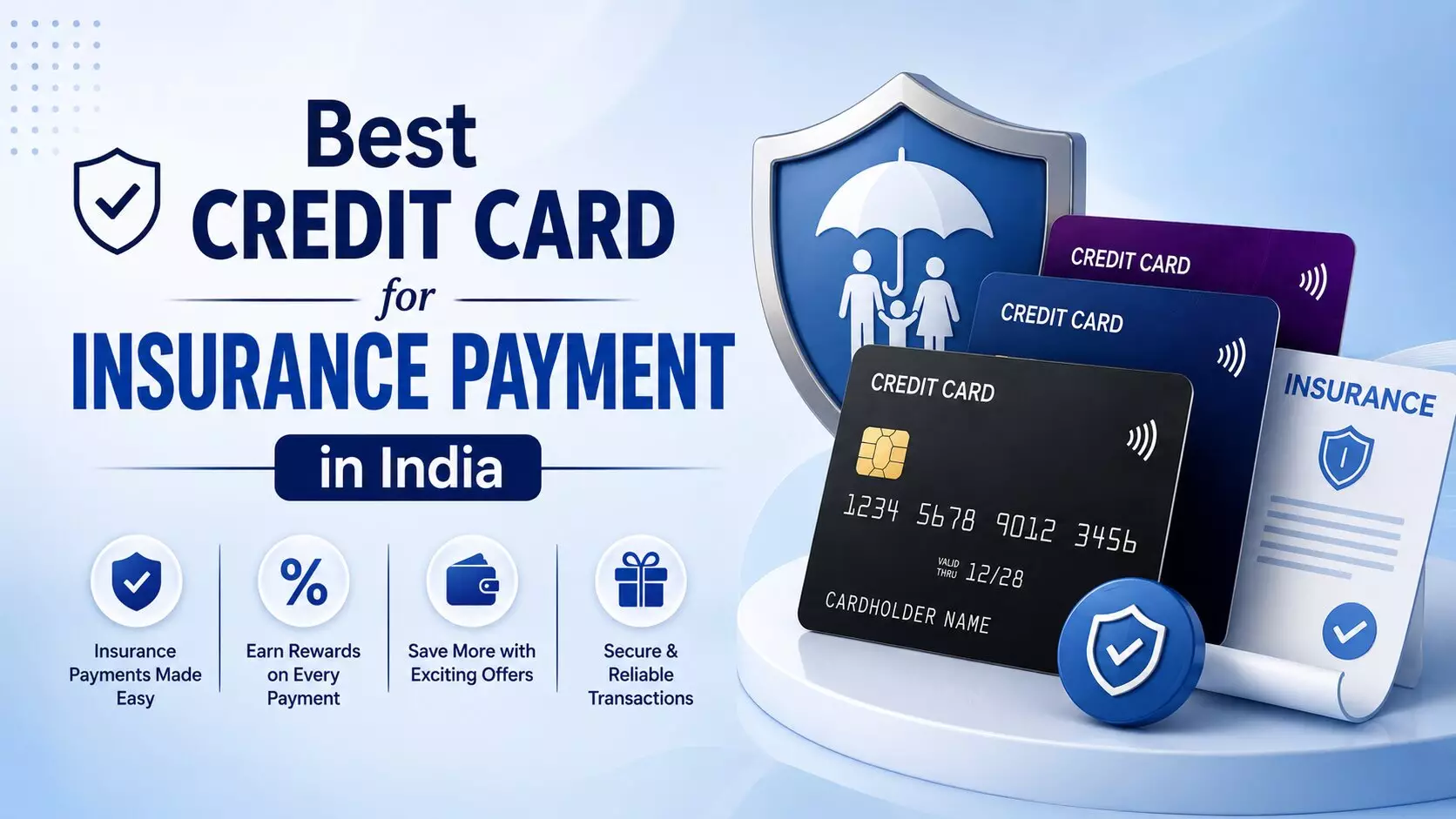
Quick answer: The best credit card for insurance payment in 2026 is one that still earns on premiums after this year's reward cuts. The Tata Neu Infinity HDFC card gives value back on insurance up to a monthly cap, the HSBC Premier rewards insurance at a higher rate, and premium cards like HDFC Infinia count premiums toward annual milestones even where daily points are capped. Because a yearly premium is one large spend, even a small reward rate returns a meaningful amount, and you get an interest-free window and the option to split it into EMIs.
Reward rules on insurance changed across most banks through 2024 to 2026. Figures below are indicative as of July 2026, exclude GST, and must be confirmed with the issuer before you rely on them.
A health, life or car policy is one of the largest single payments most families make in a year. Premiums of Rs. 25,000, Rs. 45,000 or more leave your account in one shot. Pay that by cash, netbanking or debit card and it earns you nothing. Pay it on the right credit card and the same premium can return reward points or cashback, spread the cost over an interest-free period, and even count toward a milestone benefit.
The catch in 2026 is that banks have quietly tightened the rules. Insurance used to be a soft spot for reward hacking, so issuer after issuer has either excluded it, moved it to a lower earn rate, or capped how much you can earn each month. That does not make a credit card useless for premiums, it just means the smart move now is to know which cards still reward insurance and how far the cap goes. We compared the current rules to help you do exactly that.
Nine cards across HDFC, ICICI, Axis, HSBC and Standard Chartered, judged on how well they still reward insurance premiums after the 2026 changes. Read the cap as carefully as the rate: a high rate with a low monthly cap tops out quickly on a large premium.
|
Credit Card |
Annual Fee |
Insurance Reward (2026) |
Monthly Cap |
Best For |
|
HSBC Premier |
Lifetime free (Premier) |
Higher-rate rewards on insurance spends |
Up to ~Rs. 1 lakh spend/month [VERIFY] |
High-value premiums |
|
Tata Neu Infinity HDFC |
Rs. 1,499 (waived on Rs. 3L) |
~1.5% back as NeuCoins on insurance |
2,000 NeuCoins/month |
Health & life premiums |
|
HDFC Infinia (Metal) |
Rs. 12,500 |
Points capped, but premium counts to milestone |
Insurance points capped [VERIFY] |
Premium users, milestone chasers |
|
Standard Chartered Smart |
Rs. 499 (LTF offers) |
2% cashback online / 1% offline on insurance |
Rs. 1,000 online / Rs. 500 offline |
Budget cashback on premiums |
|
ICICI Times Black |
Premium (invite) [VERIFY] |
Rewards on insurance, subject to 2026 caps |
Capped [VERIFY] |
Super-premium users |
|
Axis Bank ACE |
Rs. 499 (waived on Rs. 2L) |
Flat cashback on insurance spends |
Confirm current cap [VERIFY] |
Simple flat cashback |
|
ICICI Bank Coral |
Rs. 500 (waived on Rs. 1.5L) |
2 Reward Points per Rs. 100 (base rate) |
Subject to ICICI 2026 caps [VERIFY] |
Entry-level users |
|
ICICI Platinum Chip |
Lifetime free |
2 Reward Points per Rs. 100 (modest) |
Subject to ICICI 2026 caps [VERIFY] |
No-fee backup card |
|
Amex Platinum Travel |
Rs. 5,000 |
Premium counts toward spend milestones |
Points on insurance may not apply [VERIFY] |
Milestone reward stacking |
Note: Reward-point values differ widely. One NeuCoin equals about Rs. 1, while 1 ICICI Reward Point is worth about Rs. 0.25, and HDFC Infinia points can be worth close to Rs. 1 each when redeemed for flights or hotels through SmartBuy. Always read the reward in rupees, not the point count.
For large premiums, this is one of the few cards that still rewards insurance at a meaningful rate, reported at around 3% on insurance spends up to a high monthly cap. It is offered on a lifetime-free basis to HSBC Premier relationship customers, so the value proposition is clean if you qualify. If you pay a five-figure health or term premium each year, the reward here can be the largest on this list.
A practical everyday pick. It returns roughly 1.5% back as NeuCoins on insurance paid through the insurer's website, where 1 NeuCoin equals Rs. 1, capped at 2,000 NeuCoins a month (a rule tightened from a daily to a monthly cap in mid-2025). That cap comfortably covers a premium up to about Rs. 1.3 lakh a month, which suits most household health and life policies. The Rs. 1,499 fee is waived on Rs. 3 lakh annual spend.
The premium workhorse. HDFC has capped reward points earned on insurance, so it is no longer a points goldmine on premiums, but two things keep it relevant: its points carry high redemption value through SmartBuy, and insurance spends still count toward its annual milestone benefits. For high spenders who use the card as their primary premium and everyday card, the milestone value can matter more than the per-transaction points.
The budget cashback option. It pays 2% cashback on online insurance payments and 1% offline, with the cashback capped at Rs. 1,000 online and Rs. 500 offline per month. With a low fee that is often waived, it is a sensible pick for someone who wants straightforward cashback on a modest premium without a premium-card fee.
ICICI's super-premium card carries rich rewards and lifestyle benefits, but like the rest of the ICICI stable it is subject to the reward caps the bank rolled out in early 2026. It makes sense only if you already want a top-tier card for its wider benefits and treat insurance rewards as a bonus rather than the reason to hold it.
A simple flat-cashback card that has historically rewarded insurance spends, though Axis has tightened caps on bill and insurance categories. Confirm the current rate and cap before relying on it, but as a low-fee everyday card it remains a reasonable choice for smaller premiums bundled with your other monthly spends.
Two accessible ICICI entry cards. Both earn 2 Reward Points per Rs. 100 at the base rate, where a point is worth about Rs. 0.25, so the reward on insurance is modest. The Platinum Chip is lifetime free, which makes it a fine no-cost backup for premiums when a higher-earning card is not available. Both fall under ICICI's 2026 reward caps, so check the live terms.
Even with rewards trimmed, paying insurance on a credit card still makes sense for four reasons:
If you remember cards that once gave full reward points on insurance, you are not imagining it. Through 2024, 2025 and into 2026, most large issuers reworked their reward programs, and insurance was a prime target. Banks found that a small group of customers were routing very large premiums through high-reward cards purely to farm points, which was expensive for the issuer, so the response was caps and exclusions.
What changed, in practice: HDFC placed monthly and per-transaction caps on insurance reward points across cards like Infinia and Tata Neu. ICICI rolled out phased reward and fee changes from January to February 2026, with category caps on several cards. Axis tightened caps on insurance and utility spending. The direction is clear and unlikely to reverse, so the honest guidance for 2026 is to expect capped or modest rewards on insurance, and to value the interest-free period and EMI option alongside whatever reward you earn.
Whether a premium earns depends on how the transaction is classified. Card networks tag each merchant with a category code, and insurers usually fall under an insurance code. Your card's terms then decide whether that code earns at the normal rate, a reduced rate, or nothing, and up to what monthly cap. This is why the same card can reward a grocery swipe fully but pay little or nothing on an insurance premium.
Two more wrinkles matter. First, where you pay can change the reward: paying on the insurer's own website is sometimes treated differently from paying through an aggregator or a third-party bill app. Second, some insurers or payment gateways add a convenience fee on credit card payments, which can quietly eat into a thin reward. Always check both the card's earn rule and the insurer's payment page before assuming you will come out ahead.
Yes, but it depends on the card. Some cards still earn cashback or points on premiums, several cap how much you can earn each month, and a few exclude insurance entirely. On top of direct rewards, many premium cards count insurance toward annual milestone targets that unlock separate benefits. So the answer is a qualified yes: pick a card that still rewards insurance, stay within its cap, and you will earn, but never assume a card earns on premiums without checking its current terms.
Different policies suit different cards, mainly because premium sizes vary. This is a practical starting shortlist based on current reward structures. Confirm the live rule before you pay.
|
Insurance Type |
Best Card Options (and why) |
|
Health |
HSBC Premier or Tata Neu Infinity HDFC (rewards on large annual premiums within cap) |
|
Life / Term |
HDFC Infinia (milestone value) or Tata Neu Infinity HDFC (NeuCoins on premium) |
|
Car (motor) |
Standard Chartered Smart (2% online cashback) or Axis Bank ACE (flat cashback) |
|
Two-wheeler / Bike |
Axis Bank ACE or ICICI Coral (small premiums, low-fee cards) |
|
Home |
HDFC Infinia or any flat-reward card (one-time larger premium) |
|
Travel |
HDFC Infinia or ICICI Times Black (premium cards with travel benefits) |
Work through these questions before you pay:
A term or health premium of Rs. 40,000 to Rs. 60,000 in one month can strain a budget. Most banks let you convert a large credit card premium into an EMI over 3 to 24 months. This can be genuinely useful, but read the cost: a low-interest or no-cost EMI offer is worth taking, while a standard EMI at 13% to 16% a year plus a processing fee can cost more than the reward you earned. Convert to EMI only when the interest and fee are clearly lower than the strain of paying in full, and never let the easy instalment tempt you into a policy you cannot comfortably afford.
Many people set insurance renewals on bank auto-debit or NACH to avoid missing a payment. The trade-off is simple. Auto-debit from a bank account is reliable but earns nothing and gives no float. A credit card, especially a standing instruction on a rewarding card, earns a reward, gives you 45 days of float, and still automates the renewal. The one risk is a failed or forgotten statement payment, which triggers interest that wipes out any gain. If you already pay your card in full every month, a credit card standing instruction is usually the better of the two. If you tend to revolve a balance, stick to bank auto-debit for something as important as insurance.
Eligibility depends on the card tier. Entry cards like ICICI Coral or Platinum Chip accept modest incomes, while premium cards such as HDFC Infinia and ICICI Times Black need high income or are invite-only. General norms as of July 2026:
Tip: check your eligibility before you formally apply. A rejected application logs a hard enquiry that can dent your credit score, so a quick upfront check saves you that risk.
Consider Rajesh, a 38-year-old in Bengaluru who pays a Rs. 48,000 family health premium and a Rs. 24,000 term premium each year, Rs. 72,000 in all. Paid by debit card, he earns nothing. Paid on a Tata Neu Infinity HDFC card at roughly 1.5% back, he earns close to 1,000 NeuCoins on the health premium (within the 2,000 monthly cap) and around 360 on the term premium, worth about Rs. 1,080 in all, since 1 NeuCoin equals Rs. 1. He also gets up to 45 days of float on each payment, converts the larger premium into a no-cost EMI his bank offered, and the spends push him closer to his card's annual milestone. The reward is not enormous, but it is money he was leaving on the table, on payments he had to make anyway.
Reward rules on insurance are being revised frequently. Every rate, cap and exclusion in this guide reflects the position as of July 2026 and can change at short notice, as the 2024 to 2026 round of cuts showed. Before you pay a premium expecting a reward, open your card's latest terms or reward-program page and confirm the current insurance earn rate and cap. Treat any figure here as a starting point for your own check, not a guarantee.
Picking a card that still rewards insurance is the easy part, getting approved for the right one is where many people stumble. Your Loan Advisors is an authorised partner for leading banks including HDFC, Axis and ICICI, so you can check your eligibility upfront before applying and avoid the credit-score hit that comes with a rejected application. Our team helps you match a card to your premium size, explains the current caps in plain language, and processes your application end to end. Ready to earn your next premium? Check your eligibility with Your Loan Advisors and apply for a card that fits how you pay for insurance.
There is no card that turns insurance premiums into a jackpot anymore, but the right one still beats paying by debit card or cash. If you pay large premiums, the HSBC Premier or Tata Neu Infinity HDFC card earns the most within their caps. If you want simple cashback, the Standard Chartered Smart card does the job at low cost. If you hold a premium card like HDFC Infinia, the milestone value and interest-free float are the real prizes. Confirm the current cap, watch for convenience fees, pay in full, and let a bill you cannot avoid work a little in your favour.
Rates, fees, caps and eligibility terms mentioned here are indicative as of July 2026 and are subject to change at the bank's discretion. This article is for information only and is not financial advice. Please confirm the latest details directly with the card issuer and your insurer before making a payment.