 91-9711165183


A personal loan for shopkeepers is a collateral-free loan that funds inventory, festival stocking, renovation or cash-flow gaps. Most shopkeepers borrow ₹50,000 to ₹20 lakh at rates starting from about 10.5% p.a. (as of July 2026), repaid over 12 to 60 months, with approval based on turnover, bank statements and credit score rather than pledged assets.
Owning and running a shop in India means living with uneven cash flow. Sales spike before Diwali and slump in a wet monsoon week, suppliers want payment upfront, and a broken chiller or a bulk-stock opportunity rarely waits for your bank balance to recover. A personal loan for shopkeepers solves exactly this: quick, collateral-free money you can use for the business or personal needs, without pledging your shop or gold. This guide breaks down current interest rates, eligibility, documents, how much you can realistically borrow against seasonal income, and how to structure repayments so the EMI does not choke your working capital.
A personal loan for shopkeepers is end-use free, which is its biggest advantage over most business loans. In our review of how small retailers deploy this money, the recurring uses are:
Not every personal loan suits a shopkeeper’s income pattern. These are the features worth comparing before you sign:
Advertised “starting from” rates are usually reserved for salaried borrowers with high credit scores. As a self-employed shopkeeper you should expect a rate a notch or two higher, priced to your turnover stability and credit history. The table below is a starting point for comparison, not a quote. Confirm the live rate on each lender’s official page before applying.
| Lender (type) | Indicative rate p.a. (from) | Processing fee | Collateral |
|---|---|---|---|
| HDFC Bank (bank) | 10.90% | Up to 2.5% + GST | None |
| ICICI Bank (bank) | 10.85% | Up to 2.5% + GST | None |
| Axis Bank (bank) | 10.99% | Up to 2% + GST | None |
| Bajaj Finance (NBFC) | 11.00% | Up to 3.93% + GST | None |
| DMI Finance (NBFC) | Risk-based | As per schedule | None |
Because a shopkeeper is self-employed, lenders judge the business as much as the person. Typical criteria (subject to each lender’s policy):
A quick self-check on our free personal loan eligibility page tells you where you stand before a lender runs a hard credit enquiry.
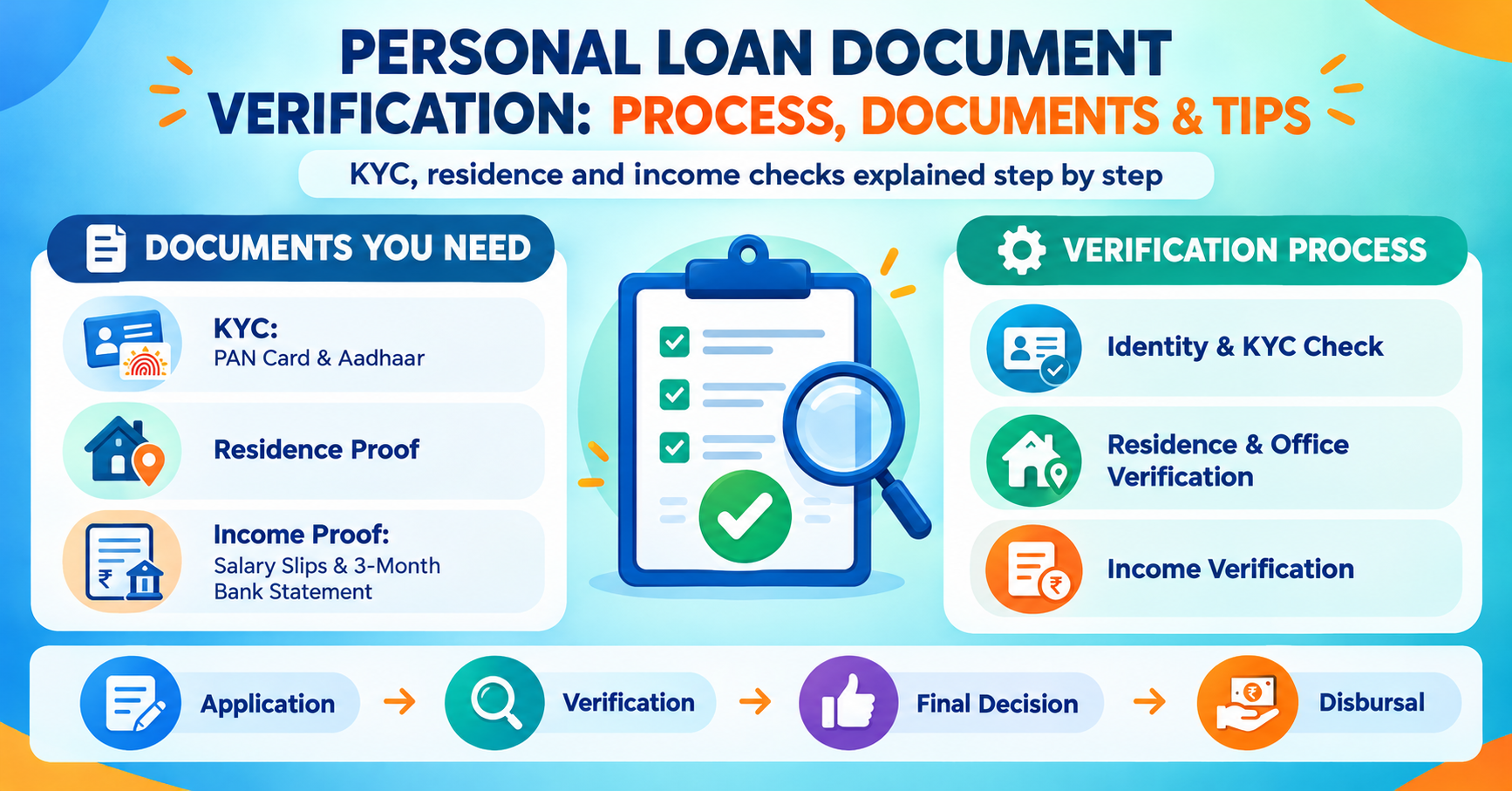
Keep these ready to speed up approval:
For a full list by lender, see our documents required for a personal loan guide.
Lenders size an unsecured loan to your repayment capacity, not your best month. A useful rule of thumb: your total EMIs (across all loans) should stay within roughly 40% to 50% of your reliable monthly income, the figure that shows up even in a slow month, not your festival peak.
Personal loan amounts for shopkeepers commonly range from ₹50,000 to ₹20 lakh depending on turnover, bank balances and credit profile. Two practical tips:
1. Borrow against your average month, not your peak. If Diwali doubles your sales, base the EMI on the other ten months so repayment stays comfortable year-round.
2. Match the tenure to the purpose. Fund fast-selling festival stock with a short 6-to-12-month loan; spread a renovation that pays back slowly over 24 to 48 months.
This is where shopkeepers can outsmart the standard monthly EMI:
Model different amounts and tenures on our personal loan EMI calculator before you commit.
The right loan size and timing depend heavily on what you sell. A kirana store restocks constantly on wafer-thin margins, while an electronics dealer locks up large sums in a handful of high-value units. We mapped the borrowing patterns we see most often across retail formats. Treat the amounts as indicative rules of thumb, not lender quotes.
| Shop type | What usually triggers borrowing | Indicative loan size | Fit notes |
|---|---|---|---|
| Kirana / grocery | Daily restocking, festival bulk buying | Rs 50,000 to Rs 3 lakh | Thin margins: keep tenure short and rate low |
| Apparel / garment | Seasonal collections, wedding and festive stock | Rs 1 lakh to Rs 8 lakh | Time EMIs to festive sell-through |
| Electronics / mobile | High-value inventory, new launches | Rs 2 lakh to Rs 15 lakh | Large ticket: compare supplier finance too |
| Pharmacy / medical | Steady demand, licence and cold-chain upkeep | Rs 1 lakh to Rs 5 lakh | Stable cash flow supports a longer tenure |
| Restaurant / bakery | Equipment, renovation, raw material | Rs 1 lakh to Rs 10 lakh | Mix a term loan with a working-capital line |
| Hardware / building material | Bulk stock, credit sales to contractors | Rs 2 lakh to Rs 20 lakh | Receivables gap: an overdraft often fits |
Retail in India runs on a predictable rhythm. Borrowing against that calendar, rather than reacting to a cash crunch, is the single habit that separates shopkeepers who grow from those who stay stuck servicing expensive debt. Here is a simple annual map you can adapt to your local festivals and trade.
| Period | What happens in retail | Smart money move |
|---|---|---|
| Aug to Oct | Festive run-up: Onam, Ganesh, Navratri, Diwali | Borrow for stock 4 to 6 weeks before the peak |
| Nov to Feb | Wedding season and year-end sales | Use the surplus to part-prepay and cut interest |
| March | Financial year-end, GST and ITR filing | Reconcile books and keep statements clean for future loans |
| Apr to Jun | Slower months for many formats | Avoid heavy EMIs; hold a cash buffer |
| Monsoon weeks | Footfall dips, deliveries slow | Time EMI auto-debit for just after your best sales day |
The takeaway: line up funds before the season, not during it, and let your strongest months do the repaying.
Plenty of shopkeepers still fund stock the old way: a quick hand-loan from the local moneylender, udhaar (trade credit) from a supplier, or a running khata. Each has a place, but the true cost is often hidden. Our view, plainly put:
Informal credit fills a genuine gap for a day or a week. For anything you will repay over months, a formal, regulated loan is usually cheaper and, importantly, it turns your repayments into a credit track record you can bank on.
A personal loan is not always the cheapest route for a shopkeeper. Here is how the main options compare, so you can pick by need rather than by whatever a salesperson pushes.
| Option | Best for | Collateral | Trade-off |
|---|---|---|---|
| Personal loan | Fast, flexible, mixed personal and business use | None | Higher rate than secured loans |
| Mudra loan (PMMY) | Micro-business needs up to ₹20 lakh | None | For business use; documentation and eligibility rules apply |
| Business loan | Larger expansion, equipment, longer tenure | Sometimes | Stricter vintage and turnover norms |
| Gold loan | Cheapest rate, quick disbursal | Gold pledged | Risk to gold if you default |
| Overdraft / cash credit | Revolving working-capital buffer | Sometimes | Interest only on the amount used |
On Mudra specifically: under the Pradhan Mantri Mudra Yojana the loan ceiling was raised from ₹10 lakh to ₹20 lakh, with a new “Tarun Plus” category for loans above ₹10 lakh and up to ₹20 lakh, effective from 24 October 2024 (as of July 2026). The four categories are Shishu (up to ₹50,000), Kishore (₹50,000 to ₹5 lakh), Tarun (₹5 lakh to ₹10 lakh) and Tarun Plus (₹10 lakh to ₹20 lakh).
Self-employed applications get rejected more often for thin paperwork than for weak business. Fix that:
Ramesh Patil, 38, runs a three-year-old crockery and gift shop in Nashik. Every October his sales triple, but he needs ₹4 lakh in September to stock up, cash he does not have after a quiet monsoon. His shop is GST-registered, he banks his daily sales, and his CIBIL score is 742.
Here is how his application moved:
3. Eligibility check: an advisor reviewed his 12-month bank statements, GST returns and score, and confirmed he comfortably fit a ₹4 lakh unsecured loan.
4. Documents: PAN, Aadhaar, shop and establishment licence, GST returns and bank statements, submitted digitally.
5. Structure: he chose a 12-month tenure to clear the loan by the next festive season, with the EMI set for the 5th of each month, just after his monthly supplier settlements.
6. Disbursement: after verification, the amount was credited to his current account, subject to eligibility, letting him stock up before the festive rush.
By December, a strong season let Ramesh make a part-prepayment and close the loan early, keeping his total interest low. His plan worked because the EMI was sized to a normal month, not his festival peak.
For a shopkeeper with seasonal, self-employed income, the hard part is not filling a form; it is matching your turnover pattern and credit profile to a lender likely to say yes, at a fair rate, without a string of rejections denting your score.
Our advisors read your bank statements and profile the way an underwriter would, flag the lenders that fund self-employed shopkeepers, and help you assemble paperwork that stands up the first time. We inform the decision; the choice stays yours.
Talk to a loan advisor at yourloanadvisors.com to check your eligibility for a personal loan for shopkeepers, with no obligation and no impact on your credit score from an initial review.
It is a collateral-free personal loan that shop owners use for business or personal needs, from stocking inventory and renovation to cash-flow gaps and emergencies. Approval is based on your income, bank statements and credit score, not on pledged assets.
Often yes. Many lenders assess 6 to 12 months of bank statements and business proof instead of, or alongside, an ITR. Filing returns and banking your sales daily still improves your odds and your rate.
Advertised personal loan rates start from roughly 10% to 11% p.a. for prime salaried borrowers (as of July 2026). As a self-employed shopkeeper, expect a rate priced to your turnover and credit score, usually a little higher. Always confirm the live rate with the lender.
Commonly ₹50,000 to ₹20 lakh, depending on turnover, bank balances and credit profile. Lenders size the loan so your total EMIs stay within about 40% to 50% of your reliable monthly income.
A personal loan is faster and end-use free, good for mixed or urgent needs. A Mudra loan (up to ₹20 lakh, as of July 2026) is built for business use and can be cheaper, but has its own eligibility and documentation. Pick by purpose and cost.
No. A personal loan for shopkeepers is unsecured, so you do not pledge your shop, stock or gold. If you are comfortable pledging gold, a gold loan usually carries a lower rate.
Typically PAN, Aadhaar, address proof, business proof (shop and establishment licence, GST registration or returns) and 6 to 12 months of bank statements. An ITR strengthens the application.
Bank your sales daily, collect through UPI, POS or mPOS, keep GST filings current, protect your credit score, and check eligibility before applying so you avoid multiple hard enquiries.
Timelines vary by lender and depend on verification and eligibility. Digital lenders can be quick, but avoid any promise of guaranteed or instant approval; disbursal is always subject to checks.
Interest rates, fees, limits and eligibility criteria mentioned here are indicative, subject to change, and were current as of July 2026. Lenders price and disburse loans under the Reserve Bank of India framework and their own credit policy. This article is information, not financial advice. Verify all figures directly with the lender or with our advisors before acting on them.