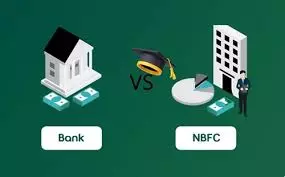
NBFC vs Bank: Which is right for your Personal Loan?
Need funds for wedding expenses? Or falling short of the amount required to complete furnishing your home? Personal loans are readily available from Banks and NBFCs for emergencies and personal needs.
What is the difference between Banks and NBFCS?
Banks and NBFCs are both registered institutions licensed by the Reserve Bank of India to provide financial and lending services in the form of
- Secured Loans: Home Loans, Loan Against Property, Vehicle Loans.
- Unsecured Loans: Personal Loan and Business Loans.
There are key differences between the functioning and facilities of a Bank and an NBFC that influence the criteria for providing credit.
- Banks offer demand deposit facilities and are part of the payment system, allowing account holders to issue cheques and transfer funds based on the deposits held in their accounts.
- Whereas RBI regulations permit NBFCs (Non-Banking Financial Institutions) to engage in lending and investments, they can accept term deposits only and are not involved in payments or cheque issuance.
Knowing the eligibility criteria and benefits of Banks and NBFCs are essential to choosing a suitable option for your personal loan requirements.
What are the benefits of a personal loan from Banks as compared to NBFCs?
Higher Personal Loan Amounts Issued by Banks v/s NBFCs
- Banks issue personal loans ranging from ₹ 1 lakh to ₹ 50 lakh. Banks have the bandwidth to issue larger loans to applicants with a CIBIL score of 720+, a high monthly income, and employment with a Super A or Category A company as per the HDFC Bank company category list.
- NBFCs issue loans ranging from ₹50k to a maximum of ₹ 20 lakhs. This is because NBFCs issue personal loans to a wider range of customers and higher-risk categories. They issue funds to applicants with lower CIBIL scores employed with proprietorship and private limited companies.
Lower Personal Loan Interest rates from Banks as compared to NBFCs.
- Banks offer personal loans at the most reasonable interest rates. From 9.99% to 13% at a monthly reduced balance. As the cost of funds available to Banks are much lower than that of NBFCs.
- NBFCs charge higher interest rates on unsecured personal loans. The interest charged by NBFCs ranges from 12% to 22% at a monthly reduced balance. NBFCs charge higher interest rates due to higher funding costs
Reduced Processing fees charged by Banks compared to NBFCs.
- Banks’ processing charges are much lower than those of NBFCs. Banks charge processing fees ranging from 0.5% to 2%. The processing fees charged for an HDFC Bank personal loan are at a standard rate, regardless of the approved loan amount.
- NBFCs charge higher processing fees for personal loans. The processing fees charged by NBFCs range from 3% to 5% of the loan amount disbursed, resulting in a substantial deduction from the approved loan amount.
Banks require fewer documents than NBFCs to process a personal loan.
- Banks have clearly defined, fixed documents required to process a personal loan. These include the Aadhaar card and PAN Card as the KYC Documents and the salary slip and Bank statement as income proof. Documents are to be submitted online or provided in hard copy to initiate processing.
- NBFCs require extensive documentation to process a personal loan, including additional address proof for both current and permanent residence. The NBFC’s credit officer can request additional documents to clarify existing debts. Approvals are also issued provisionally, with documents to be submitted before disbursal.
Advantages of applying to an NBFC for a personal loan, as compared to a Bank.
NBFCs issue personal loans to employees of all companies; Banks are restricted by policy.
- NBFCs process personal loans for employees of all types of companies, including Limited, Private Ltd, PSU, Government organisations, and Partnership and proprietorship companies, as well as applicants from all organisations.
- Banks will not process a personal loan if your employer does not feature in the Approved Company Category List of the bank. The terms of the loan are determined by the company’s category.
If you have a lower CIBIL score and need a Personal Loan, apply to an NBFC.
- If, for some reason, your CIBIL score is not up to the mark, an NBFC can provide you with a personal loan when required. An NBFC will review your CIBIL, taking into account the reason for the decline. If there are no consistent defaults and your recent payment transactions are regular, you have a chance to redeem your CIBIL score with an NBFC.
- Banks process personal loan applications, placing emphasis on the CIBIL score. Most banks have a minimum score requirement of 720 or higher to qualify for a personal loan. Banks following the scorecard system will not process your personal loan further if the minimum score requirements are not met.
Avail a lower interest rate by transferring your credit card dues to a personal loan from an NBFC.
- The interest rate on unpaid credit card dues is 36% to 40% per annum. This high interest rate can lead to a debt trap if you are unable to clear your credit card dues. With the help of a Personal Loan Balance transfer to an NBFC, such as SMFG Credit, you can clear your credit card bill. The due amount is repaid through easy EMIs over a limited tenure at a reasonable interest rate.
- Banks have stringent guidelines for processing a credit card transfer; the overdue bill cannot exceed 5 times the applicant’s monthly salary. The applicant must meet the Bank’s eligibility criteria, and if other loans are in place, the applicant may be declined as overleveraged.
Transfer the high-interest APP Loans to an NBFC Personal loan with a Balance Transfer.
- App loans, as they are popularly known, are extremely popular due to their quick funding and availability of smaller amounts. Customers take an App loan to tide them over a financial shortfall without realising the high interest applicable. NBFCs like SMFG India Credit Company help customers get out of high-debt, application-based loans through balance transfers. The amount is converted into a personal loan at a reasonable interest rate with a suitable EMI.
- Banks do not process balance transfers for personal loans held with an alternate Bank or an NBFC, but do not accept balance transfers for App loans. If you have taken App loans and are under pressure from high interest rates, do not wait for your debt to build up and lead to a default. Transfer the balance of your App loan to an NBFC.
Conclusion.
A personal loan from a Bank or an NBFC, the decision will depend on the following inputs:
Circumstances in which applying for a personal loan from a bank is a better option.
- When higher loan amounts are needed.
- If your CIBIL score is above 720 points.
- Banks provide personal loans at lower costs.
- Banks offer prioritised processing with minimal documents.
Situations when a Personal Loan from an NBFC is a good option.
- If your CIBIL score is below the required benchmark.
- If you are employed with a non-listed company.
- You need to repay your credit card dues.
- If your existing debts are branding you as overleveraged.


 91-9711165183
 January 30, 2026