 91-9711165183


A personal loan for architects is an unsecured loan of roughly ₹50,000 to ₹40 lakh, at interest rates starting around 9.99% p.a. (as of July 2026), repayable over 12 to 84 months. Salaried architects qualify on salary slips; self-employed architects qualify on ITRs, bank statements and client contracts.
Architecture pays well on paper, but the cash rarely lands on time. Milestone billing, delayed client approvals and long project cycles mean an architect can be profitable for the year yet short on funds in any given month. A personal loan for architects closes that gap. It is a collateral-free loan you can use for design software, a high-end workstation, studio rent, staff salaries or a personal need, repaid in fixed EMIs that you can time around your project inflows.
On this page: why architects borrow, income bands lenders look at, features to compare, eligibility for salaried and freelance architects, documents, a July 2026 rate table, funding alternatives, EMI structuring, a worked example, approval tips, fees, a tax note, and FAQs.
Two forces drive borrowing in this profession: lumpy income and high setup costs. A practice can wait 60 to 120 days for a payment certificate to clear while salaries, software renewals and rent fall due every month. Common reasons architects reach for a personal loan include:
A trust signal worth knowing: India’s real estate sector is projected to reach US$1 trillion by 2030 according to IBEF, which is exactly why lenders increasingly treat qualified architects as a stable professional segment rather than a risky self-employed one.
Lenders do not just see ‘architect’; they see the income band and how stable it looks. Where you sit on this ladder decides your eligible amount and rate. The figures below are indicative market ranges (as of July 2026), not a promise of what you earn or what a lender will offer.
| Career stage | Indicative income | How lenders read it |
|---|---|---|
| Fresh / junior architect (0 to 3 yrs) | ₹3 to 5 LPA (about ₹19,000 to 30,000/month) | Often near the minimum salary bar in metros; may need a co-applicant or a smaller amount. |
| Mid-level architect (4 to 8 yrs) | ₹6 to 12 LPA | Clears most salaried eligibility norms; clean salary credits help the rate. |
| Senior / associate architect (8 to 15 yrs) | ₹12 to 25 LPA | Strong profile; eligible for higher amounts and sharper pricing. |
| Principal / firm owner (15+ yrs) | ₹18 to 50 LPA (varies widely) | Assessed on ITRs and firm cash flow, not a salary slip; documentation is everything. |
| Freelance / independent practice | ₹40,000 to 2,00,000/month (portfolio-led) | Judged on ITR consistency and bank inflows; retainers and repeat clients lift eligibility. |
One edge worth using: BIM is currently among the highest-paid technical specialisations in Indian architecture and engineering. If your income leans on BIM or high-end visualisation work, say so in your application, since it signals a premium, in-demand skill and a more durable income. Income ranges compiled from market salary sources; treat as indicative and verify against your own ITRs.
Architects see two products marketed at them, and mixing them up costs money.
For most working architects who want flexibility, the personal loan wins on speed and freedom of use. If the requirement is large and strictly for the firm, compare a professional loan or a secured line before deciding.
Eligibility splits along how you earn. Salaried architects at a firm are underwritten like any salaried professional; independent practitioners are assessed on the health and consistency of their receipts.
A CIBIL score of about 700 or higher earns the sharpest rates; several NBFCs set 700 as a floor. You can check your score for free once a year at CIBIL. Below 700, expect a higher rate, a co-applicant request or a smaller sanction. (Score bands as of July 2026.)
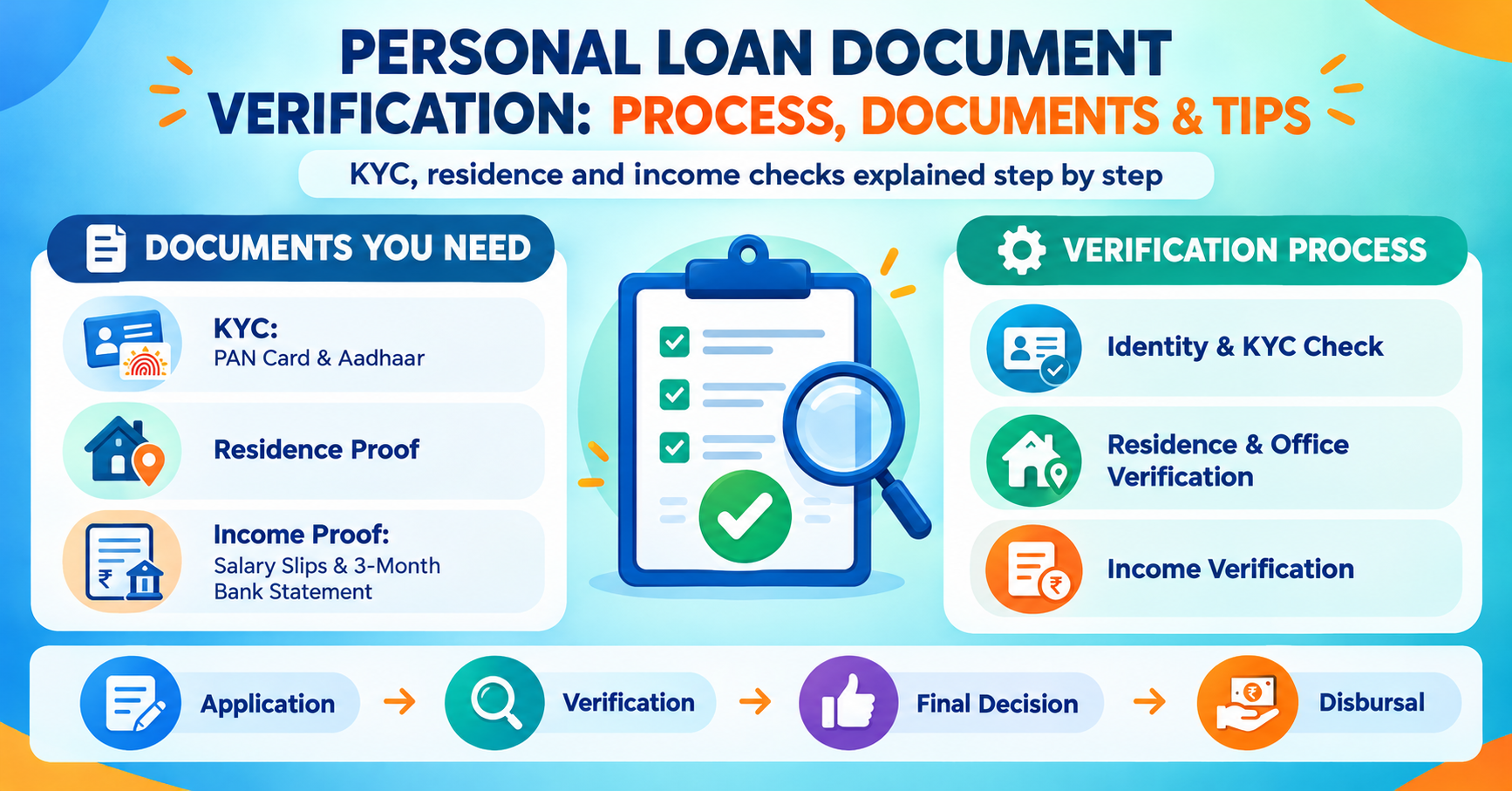
For all architects: PAN card, Aadhaar (or other KYC), and address proof.
Salaried architects: last 3 months’ salary slips, Form 16, and 3 to 6 months’ bank statements.
Self-employed and freelance architects: 2 to 3 years’ ITRs, 6 to 12 months’ bank statements, GST returns if registered, and proof of practice such as COA registration, firm registration or a professional degree certificate.
Strengthen a freelance file with: signed client retainer agreements, active project contracts, and a short portfolio or work-order list showing repeat clients. Underwriters read repeat business as recurring income.
We compared four banks and three NBFCs on their published personal loan terms. Architects usually get the headline rate only with a strong score and clean ITRs; self-employed profiles tend to price higher than salaried ones. Rates and fees are indicative starting points, not offers.
| Lender (type) | Indicative rate p.a. | Processing fee | Max tenure |
|---|---|---|---|
| HDFC Bank (Bank) | 9.99% onwards | Up to ₹6,500 + GST (up to ~2.50%) | Up to 7 yrs |
| ICICI Bank (Bank) | 9.99% onwards | Up to 2% + GST | Up to 6 yrs |
| Axis Bank (Bank) | 9.99% onwards | 1.5% to 2% + GST | Up to 7 yrs |
| SBI Xpress Credit (Bank) | 11.45% to 14.60% | 1.5% (₹1,000 to ₹15,000) + GST | Up to 6 yrs |
| Bajaj Finance (NBFC) | 10% onwards (self-employed higher) | Up to 3.93% (incl. taxes) | Up to 8 yrs |
| Tata Capital (NBFC) | 10.99% onwards | Up to 5% + GST | Up to 6 yrs |
| DMI Finance (NBFC) | As per lender’s rate policy | Per schedule of charges | Flexible; ₹50k to ₹5L, 24 to 72 hr disbursal |
Source and date: official lender rate-and-charges pages, HDFC, ICICI, Axis, SBI Xpress Credit, Bajaj Finance, Tata Capital, DMI Finance. Accessed and valid as of July 2026.
Our read: the three private banks cluster at a 9.99% headline that few self-employed architects will actually get; SBI is transparent but salary-account led. Among NBFCs, DMI Finance is the only one that markets an architect-specific product with fast, digital disbursal, though its ceiling is ₹5 lakh. Tata Capital’s processing fee band is the widest, so negotiate it.
A personal loan is fast and flexible, but it is not always the cheapest tool for the job. Before you borrow, weigh it against the alternatives an architect typically has. The right choice depends on the size of the need, how quickly you need the money, and whether it is a one-off purchase or a running cash-flow gap.
| Funding route | Best for an architect when | Watch-outs |
|---|---|---|
| Personal loan | You need money fast for mixed personal and practice spends, end-use free | Unsecured, so the rate is higher than a secured option |
| Professional / business loan | The spend is strictly for the firm and possibly larger | End use is restricted; lenders may want more financials |
| Loan against property (LAP) | A large, long-tenure need where a lower rate matters most | Secured against your home or office; slower, and the asset is at risk on default |
| Equipment / vendor finance or subscription EMI | Buying one specific workstation, plotter, or a software licence | Tied to a single purchase; compare the effective rate against a personal loan |
| Business credit card | Short bridging of a cash-flow gap you can clear next cycle | Very costly if you carry a balance; not for large or long needs |
Our read: for a ₹1 to 5 lakh mixed need with a delayed milestone in sight, a personal loan usually wins on speed and freedom. For a ₹15 lakh studio fit-out you can secure, LAP will almost always be cheaper. For a single ₹2 lakh workstation, check the vendor’s no-cost EMI before taking on a full loan.
This is where architects should think differently from salaried borrowers. Your income is lumpy, so your repayment plan should protect the lean months.
Worked EMI example: a ₹5,00,000 loan at 12% p.a. Reducing balance over 4 years works out to roughly ₹13,170 a month, with about ₹1.32 lakh in total interest. Numbers are illustrative; confirm with the lender or an EMI calculator before you commit.
Ananya Deshpande, 32, runs a three-person architecture practice in Pune. She has 5 years of independent work after leaving a large firm, files ITRs every year, and books most of her revenue on 40-30-30 milestone terms, which leaves her cash-tight between projects.
Her need: ₹6 lakh for a Revit and Lumion licence bundle, a rendering workstation, and the deposit on a larger studio, right as two clients delayed their second-milestone payments.
1. Eligibility check: CIBIL 748, 3 years of clean ITRs, and 12 months of bank statements showing steady retainer credits. Comfortably above the 700 floor most NBFCs set.
2. Documentation: PAN, Aadhaar, ITRs, bank statements, GST returns, COA registration, and two signed client retainer agreements to evidence recurring income.
3. Structuring: she took ₹6 lakh over 60 months to keep the EMI near ₹13,300, deliberately low, planning to part-prepay when her delayed milestones landed.
4. Disbursal: with a complete file, the sanction and digital KYC wrapped up quickly and funds hit her account within a few working days.
5. Outcome: three months later she prepaid ₹2 lakh from a cleared milestone, cutting her interest outgo while keeping the small monthly commitment. Figures are illustrative.
Know your rights: lender conduct on rates, charges and recovery is governed by RBI’s framework on fair lending practices. Read the sanction letter and key fact statement before you sign.
Here is an angle most architect loan pages skip. If you are self-employed and use part of the loan for your practice, buying software, a workstation, or paying staff, the interest on that portion may be claimed as a business expense under Section 37(1) of the Income Tax Act, which reduces your taxable professional income. There is no interest deduction for salaried borrowers on a personal loan, and no deduction on the portion you spend on personal needs.
Read the provision on the Income Tax Department site and a plain-English explainer of Section 37 business expenses. Tax treatment depends on your specific facts, so confirm with your chartered accountant before you claim anything. This is information, not tax advice.
6. Check eligibility: confirm age, income, vintage and credit score against the lender’s norms.
7. Compare offers: weigh rate, processing fee and foreclosure terms together, not the rate alone.
8. Gather documents: KYC, income proof, ITRs and bank statements, plus contracts for a freelance file.
9. Apply and complete KYC: submit online or in branch and finish e-KYC and e-mandate for EMIs.
10. Review the sanction letter: verify rate, EMI, tenure and every charge before you accept.
11. Disbursal: on approval, funds are credited to your account; timelines vary by lender and how complete your file is.
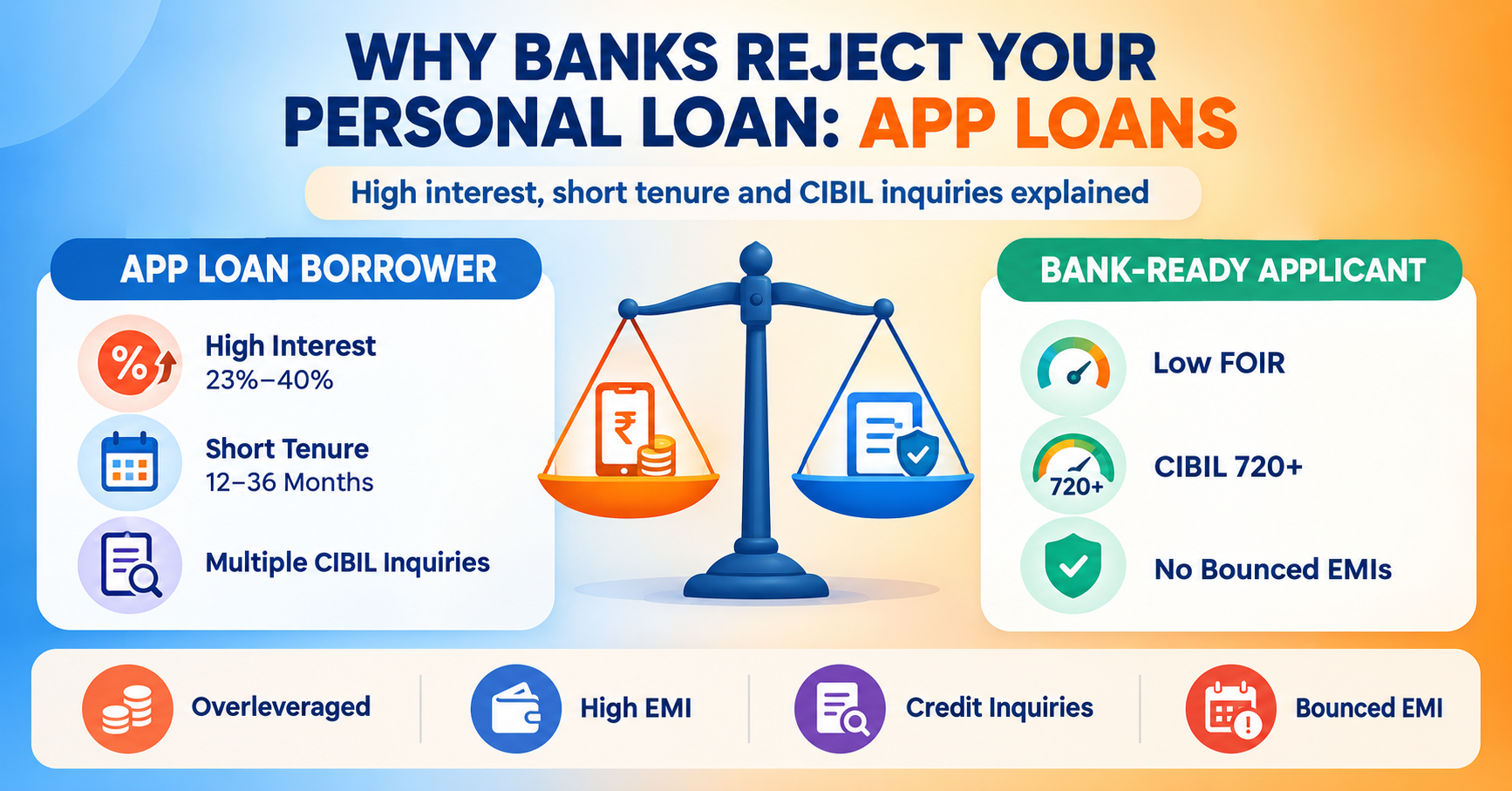
Sorting through bank and NBFC fine print while running a practice is a poor use of an architect’s time. At youloanadvisors.com, our experts read your income pattern, whether salaried or project-based, and match you to lenders whose underwriting actually fits a professional with milestone income, so you are not wasting hard credit enquiries on rejections.
We explain the trade-off between rate, processing fee and foreclosure terms in plain numbers, and help you assemble a file that presents your retainers and ITRs the way underwriters want to see them.
Ready to move? Check your eligibility with a yourloanadvisors.com advisor and get a clear read on the options that suit an architect’s income before you apply.
Rates start around 9.99% p.a. from leading banks and about 10% to 11% from major NBFCs (as of July 2026). Self-employed architects usually price a little higher than salaried ones. Your actual rate depends on credit score, income stability and existing obligations.
Yes. Self-employed architects qualify on ITRs, bank statements, GST returns and client contracts rather than salary slips. Many NBFCs accept an average monthly income from about ₹25,000 and a practice vintage of 2 to 3 years.
No. A personal loan for architects is unsecured, so you do not pledge property or investments. Approval rests on income, credit score and repayment capacity.
Depending on income and profile, sanctions typically range from ₹50,000 to ₹40 lakh. NBFCs with architect-specific products may cap lower, for example up to ₹5 lakh, but disburse fast.
A CIBIL score of about 700 or higher is the practical threshold for competitive rates. Below that, expect a higher rate, a co-applicant request or a smaller amount.
Usually yes, subject to the lock-in and foreclosure charges in your agreement. For architects with lumpy income, choosing a lender with low foreclosure charges is worth more than a marginally lower rate.
For a self-employed architect, interest on the portion used for the practice may be claimed as a business expense under Section 37(1) of the Income Tax Act. There is no such deduction for salaried borrowers or for personal-use spends. Confirm with your CA.
PAN, Aadhaar, address proof, 2 to 3 years’ ITRs, 6 to 12 months’ bank statements, GST returns if registered, and proof of practice such as COA registration or a degree certificate. Add client retainers to strengthen the file.
With a complete file it can range from a day or two to about a week, depending on the lender and verification. Some digital NBFCs advertise disbursal within 24 to 72 hours, subject to eligibility.
A personal loan is faster and end-use free, ideal for mixed personal and practice needs. A professional loan may suit large, strictly practice-related spends. Compare both before deciding.
Interest rates, fees, eligibility norms and product terms are indicative, sourced as of July 2026, and subject to change at each lender’s discretion. This page is information, not financial or tax advice. Verify current rates and terms directly with the lender or with a yourloanadvisors.com advisor before applying. Figures marked illustrative are examples, not quotes.