 91-9711165183


TL;DR
A woman can get a personal loan for any personal need, with no collateral. Real rate concessions for women mostly sit in home loans, and the women-first schemes, Mudra and Stand-Up India, are for business. Here is what fits.
Yes, a woman can get a personal loan in India if she meets the lender’s income, age, and credit score conditions. A salaried or self-employed woman applies the same way anyone else does. Some banks advertise a small rate or fee concession for women, but these offers are limited and worth confirming before you apply.
The rest of this page separates the genuine benefits from the marketing. We compared what banks and NBFCs actually offer women as of July 2026, checked the government schemes built for women, and set out the eligibility, documents, and application steps so you can pick the right product the first time.
A personal loan for women is a collateral-free (unsecured) loan that a woman borrows for a personal expense. You do not pledge any asset, you receive a lump sum, and you repay it in fixed monthly EMIs over a chosen tenure, usually 12 to 60 months. The end use is flexible: a wedding, a medical emergency, home renovation, travel, education costs, or debt consolidation.
In most cases the product itself is the same personal loan a bank offers everyone. The words “for women” describe the borrower, not a separate loan category with its own law or rulebook. What can differ is a small pricing concession, a fee waiver, or a co-branded women’s variant that a specific lender chooses to run. Those are the parts you should verify, and we cover them below.
This is where honesty matters. Most lenders still want to see repayment capacity before they approve an unsecured loan. A pure personal loan with no income proof at all, approved instantly, is rare and usually comes with a very high rate or a small limit. If you see a promise of guaranteed approval with zero documents, treat it with caution.
If you do not have a salary slip, you still have real routes:
If you are a homemaker specifically, the co-applicant route and secured options are usually your best bet. Our guide on a personal loan for housewives walks through this in detail.
Here is the plain answer. The genuine, well-documented rate concessions for women in India are mostly on home loans, not personal loans. For example, lenders like SBI run home loan schemes for women with a small rate benefit of around 0.05%, and several states charge lower stamp duty when a property is registered in a woman’s name. On unsecured personal loans, a women-specific rate cut is far less common and, where it exists, it is usually a token 0.05% to 0.25%, not a headline saving.
Your interest rate on a personal loan is driven mainly by your credit score, income stability, employer or business profile, and existing debts. A woman with a 780-credit score will almost always get a better rate than a man with a 680 score. Therefore, the biggest lever in your hands is your own profile, not a gender label on the product.
| What this means for you Do not choose a lender only because it advertises a “women’s special rate.” Compare the actual rate you are offered after your profile is assessed. A bank with no women’s badge but a lower base rate can still be cheaper than one running a 0.10% women’s concession on a higher base. |
|---|
Processing fee waivers for women do appear from time to time, usually as limited-period festive or campaign offers rather than a permanent feature. A waiver is real money saved, since processing fees run from about 1% to 3.5% of the loan amount. On a ₹5 lakh loan, a 2% fee is ₹10,000 plus GST, so a genuine waiver is worth chasing.
The catch is that many “zero processing fee for women” banners you find through search are old campaigns that have quietly ended. Before you count on a waiver, confirm it is live on the lender’s current rate card or ask a Your Loan Advisors expert to check the active offers for you. Do not assume an offer you saw last year still stands.
This is the single most useful distinction on this page, because it decides which product you should even apply for. The famous government schemes for women, Mudra and Stand-Up India, are business loans, not personal loans. They fund an enterprise, not a wedding or a medical bill. If your need is personal, a bank or NBFC personal loan is the right door. If your need is to start or grow a business, the schemes below are usually cheaper and better structured.
| Option | Amount | Purpose | Collateral | Best for |
|---|---|---|---|---|
| Bank / NBFC personal loan | ₹50,000 to ₹40 lakh | Any personal need | Not required | Wedding, medical, travel, home repair |
| Mudra loan (PMMY) | Up to ₹20 lakh | Micro-business only | Collateral-free | Small shop, home business, services |
| Stand-Up India | ₹10 lakh to ₹1 crore | New business only | Per lender norms | Women setting up a fresh enterprise |
The Pradhan Mantri Mudra Yojana gives collateral-free loans to non-corporate, non-farm micro-enterprises. It has four categories as of July 2026: Shishu up to ₹50,000, Kishor from ₹50,001 to ₹5 lakh, Tarun from ₹5 lakh to ₹10 lakh, and Tarun Plus from ₹10 lakh to ₹20 lakh. Many women use Mudra for tailoring units, beauty parlours, kirana shops, and similar ventures. It cannot be used for a personal expense.
Stand-Up India is built specifically for women and SC/ST entrepreneurs. It funds a bank loan of ₹10 lakh to ₹1 crore for a brand-new (greenfield) enterprise in manufacturing, services, trading, or allied agriculture. The woman must hold at least 51% of the business, be 18 or older, and have a clean repayment record. Repayment runs up to 7 years with a moratorium, and the borrower typically brings a margin of around 15% of the project cost. Again, this is a business loan, not a personal one.
Women entrepreneurs often reach for a personal loan out of habit, then pay more than they should. The rule of thumb is simple. If the money is for you and your family, use a personal loan. If the money is for your business, a business loan or a government scheme is usually the smarter and cheaper choice, because those products offer larger limits, collateral-free options, and sometimes subsidised rates.
| If your need is… | The better-fit product is… |
|---|---|
| Wedding, medical bill, travel, home renovation | Personal loan for women |
| Debt consolidation or a big personal purchase | Personal loan for women |
| Buying stock, machinery, or a shop for your business | Mudra or a business loan |
| Starting a new manufacturing or services venture | Stand-Up India |
Applying for the wrong product is a common reason women overpay or get rejected. If you are unsure, our MSME and business loan for women page explains the business side, and a Your Loan Advisors expert can point you to the right one before you apply.
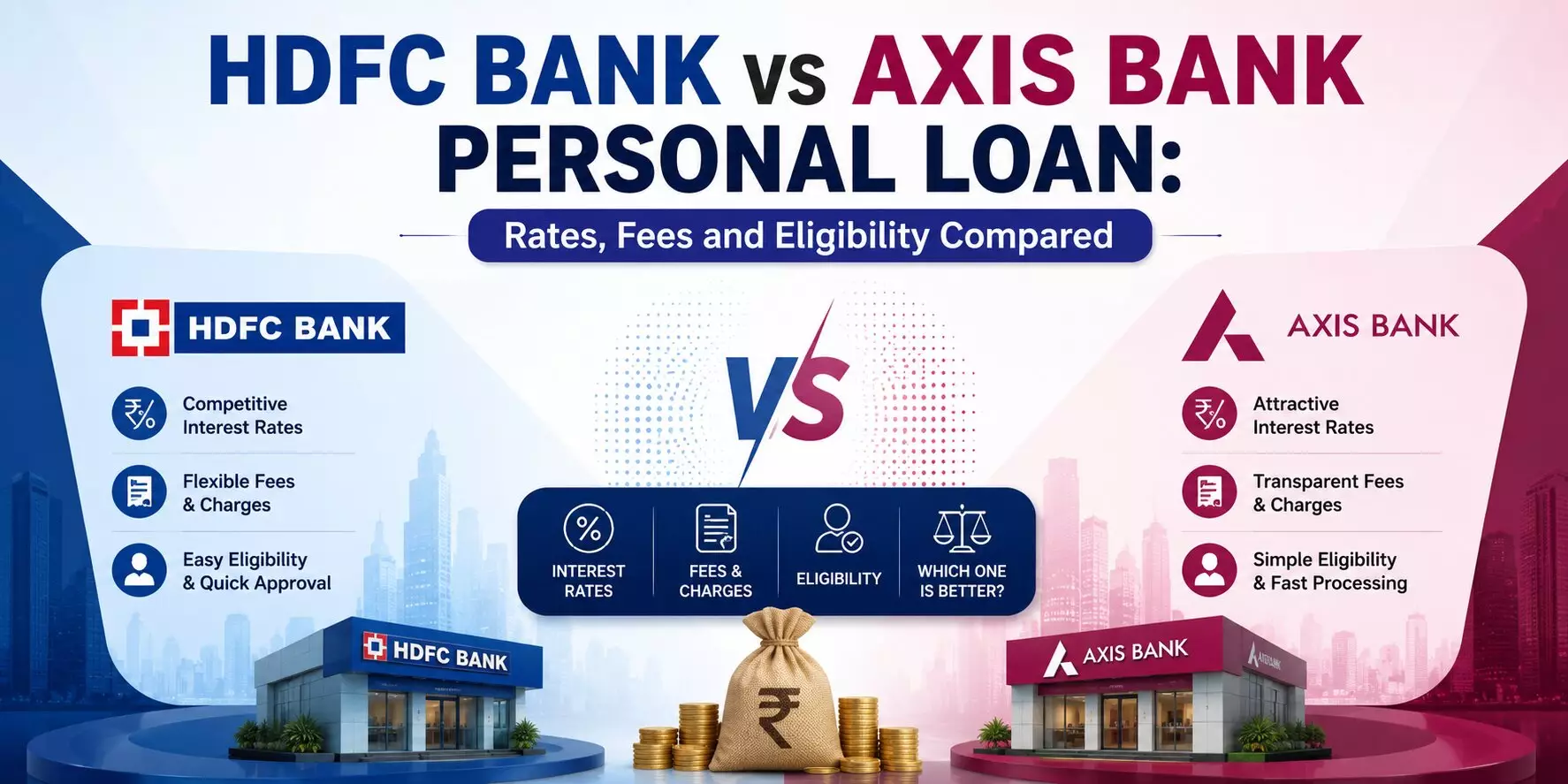
Below is a snapshot of starting personal loan rates and processing fees from major lenders. These are the same products a woman applies for. Your final rate depends on your profile, and figures change, so confirm the current number before you commit.
| Lender | Interest rate (from) | Processing fee | Notes |
|---|---|---|---|
| Axis Bank | 8.75% p.a. onwards | Up to 2% | One of the lower starting rates |
| HDFC Bank | 9.99% p.a. onwards | Up to ₹6,500 + GST | Wide rate band by profile |
| ICICI Bank | 9.99% p.a. onwards | Up to 2% | Strong for existing customers |
| SBI | 10.00% p.a. onwards | Up to 1.50% | Lower fee, salaried focus |
| Kotak Mahindra | 10.99% p.a. onwards | Up to 5% | Check fee carefully |
| IDFC First Bank | 9.99% p.a. onwards | 0% to 3.5% | Runs women-linked variants |
| Bank of Maharashtra | 8.75% p.a. onwards | Up to 1% | Low fee, public-sector option |
Reading this table, the takeaway is that the base rate and fee matter more than any “women’s” label. Axis Bank and Bank of Maharashtra show the lowest starting rates in this set, while Kotak’s processing fee of up to 5% is on the higher side and worth negotiating. This is the kind of comparison that saves real money.
Meet Priya
Priya, a 34-year-old schoolteacher in Pune, needed ₹4 lakh for her sister’s wedding. She almost applied for a women’s business scheme because a friend suggested it, which would have been the wrong fit for a personal expense. Instead, she checked her eligibility, applied for a plain personal loan on a 780-credit score, and was approved at a competitive rate. She chose a 36-month tenure to keep the EMI manageable and repaid on time, which also lifted her score for the future.
There is no single best loan, only the best fit for your need. For a personal expense, the best personal loan is the one with the lowest all-in cost you actually qualify for, which means comparing the interest rate, the processing fee, and any prepayment charges together, not just the headline rate. For a business need, a government scheme almost always beats a personal loan on cost and structure.
What consistently helps women get the best terms is a credit score above 750, a stable income record, a low existing-EMI burden, and a clean repayment history. Improve those first, and the product label matters far less.
Exact conditions vary by lender, but most banks and NBFCs look for the following. Meeting these does not guarantee approval; it makes you eligible to apply.
| Criteria | Typical requirement |
|---|---|
| Age | 21 to 60 years (salaried); up to 65 for some self-employed |
| Income | A steady income; many lenders start around ₹15,000 to ₹25,000 net per month |
| Employment | Salaried, self-employed professional, or business owner with continuity |
| Credit score | Ideally 750 or above for the best rates |
| Residency | Indian resident, with valid KYC |
| Documents | Complete and consistent, as listed below |
Keeping these ready speeds up approval. A woman applying with a co-applicant should keep the co-applicant’s documents ready too.
You can apply directly with a bank, but that means filling one form at a time and hoping the rate fits. Applying through Your Loan Advisors is simpler, because we check your eligibility upfront and match you to a partner bank likely to approve you at a fair rate.
A personal loan for women is a straightforward, collateral-free way to fund a personal need, and a woman qualifies on the same terms as anyone else. The smart move is to see past the marketing: real rate concessions for women mostly sit in home loans, the genuine women-first schemes (Mudra and Stand-Up India) are for business, and your own credit profile decides your rate more than any label. Match the product to your need, compare the all-in cost, and you will borrow well.
Apply through Your Loan Advisors
Skip the guesswork on which “women’s offer” is real. Tell us what you need and we check your eligibility upfront, then match you to a partner bank likely to approve you at a fair rate and help process the application end to end. Check your personal loan eligibility with a Your Loan Advisors expert today.
Without a salary slip you can still apply as a self-employed borrower using ITR and bank statements, or add an earning spouse or family member as a co-applicant so their income supports the file. Homemakers often use a co-applicant, or a secured option like a gold loan or a loan against a fixed deposit, which does not need income proof at all.
A personal loan is for personal needs such as a wedding or medical bill, needs no collateral, and can be spent on anything. Mudra is a collateral-free business loan of up to ₹20 lakh, meant only to start or run a micro-enterprise. If your need is personal, use a personal loan. If it is for a business, Mudra or Stand-Up India is usually cheaper and better structured.
Mostly marketing on personal loans. The well-documented women’s rate benefits in India sit on home loans, such as a small concession of around 0.05% and lower stamp duty in some states. On personal loans, a women-specific cut, where it exists, is usually a token 0.05% to 0.25%. Your credit score and income affect your rate far more than a gender label, so compare the actual offer.
A self-employed woman can apply with any lender using ITR and business bank statements instead of a salary slip. A housewife without her own income usually needs an earning co-applicant, or she can look at secured options like a gold loan or a loan against a fixed deposit or securities, which do not depend on income proof because an asset backs the loan.
It depends on the lender and your existing EMIs, but a common guide is that total EMIs should stay under about 50% to 55% of your net income. On a ₹40,000 salary with few existing debts and a good credit score, many lenders would consider a loan in the range of roughly ₹4 lakh to ₹9 lakh. The exact figure is set after your full profile is assessed.
Identity proof (Aadhaar, PAN), address proof, and income proof. Salaried applicants give 3 months’ salary slips and 6 months’ bank statements. Self-employed applicants give ITR, business bank statements, and business proof such as GST or Udyam registration. If you apply with a co-applicant, keep their documents ready too.
For anything tied to the shop, such as stock, equipment, or premises, a business loan or a Mudra loan is usually better, because it offers larger limits, collateral-free options, and sometimes subsidised rates. A personal loan is the better fit only when the money is for a personal need. Applying for the wrong product is a common reason women overpay.
For a clean, complete application, many lenders approve within a day or two and disburse shortly after, though timelines vary by lender and your documents. Applying through Your Loan Advisors helps here, because we check eligibility upfront and match you to a bank likely to approve you, which reduces back-and-forth. [Confirm typical processing time with your Your Loan Advisors expert.]
Disclaimer: Rates and terms are subject to change. This is information, not financial advice. Confirm details directly with a Your Loan Advisors expert.